[:fr]
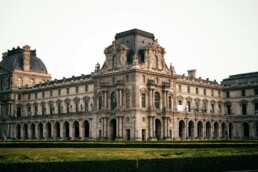
Dans les galeries labyrinthiques du Louvre, parmi les chefs-d’œuvre qui jalonnent ce temple de l’art, repose une toile qui capte l’œil et l’imaginaire : « Une Odalisque ». Cette œuvre, baignée de mystère et de sensualité, nous invite à un voyage contemplatif au cœur de l’Orient rêvé.
L’Odalisque, étendue sur des coussins somptueux, est une vision de grâce et de volupté. Sa peau pâle contraste avec les riches étoffes qui l’entourent, un jeu de lumière et de texture que le peintre a su capturer avec une finesse inégalée. Les visiteurs du musée, s’arrêtant devant cette scène intime, sont souvent frappés par la quiétude qui émane de la figure. Une anecdote rapportée par un gardien du musée raconte qu’un jour, un poète, ému par la beauté sereine de l’Odalisque, resta assis devant le tableau pendant des heures, griffonnant des vers inspirés sur un vieux carnet en cuir.
La création de cette œuvre remonte à une époque où l’Orientalisme enflammait l’imaginaire des artistes européens. Le peintre, fasciné par les récits exotiques et les paysages lointains, cherchait à capturer l’essence d’un monde qu’il n’avait jamais vu de ses propres yeux. Pour cela, il s’entourait d’objets et de textiles importés, recréant dans son atelier une atmosphère propice à l’inspiration. Une nuit, alors qu’il travaillait tardivement à la lumière vacillante des bougies, il eut une vision fugitive d’une femme voilée qui disparut aussi soudainement qu’elle était apparue. Cet instant fugace, gravé dans sa mémoire, devint la genèse de son Odalisque.
L’œuvre fut exposée pour la première fois lors d’un salon parisien, où elle suscita à la fois admiration et controverse. Les critiques se divisaient entre ceux qui louaient la maîtrise technique du peintre et ceux qui dénonçaient ce qu’ils percevaient comme une idéalisation exotique et stéréotypée de l’Orient. Un écrivain célèbre, présent lors de l’inauguration, fut particulièrement éloquent dans sa défense du tableau, affirmant que l’art n’avait pas pour vocation de reproduire fidèlement la réalité, mais de transcender le quotidien pour atteindre une vérité universelle.
Dans les années qui suivirent, « Une Odalisque » trouva sa place au Louvre, où elle devint une source inépuisable d’inspiration pour les artistes et les rêveurs. Un peintre de la nouvelle génération, fasciné par la maîtrise des couleurs et des ombres, passait des heures à étudier les moindres détails de la toile, cherchant à percer les secrets de son créateur. Un jour, il fut surpris en train de murmurer des mots à l’oreille de l’Odalisque, comme s’il espérait que le personnage répondrait à ses interrogations silencieuses.
Aujourd’hui encore, « Une Odalisque » continue de captiver les visiteurs du Louvre, offrant une échappatoire enchantée dans un monde de douceur et de mystère. Chaque regard posé sur la toile est une invitation à la rêverie, une passerelle vers un ailleurs réinventé par le génie d’un artiste en quête de l’infini. Ainsi, dans le calme feutré des galeries du Louvre, l’Odalisque demeure un symbole intemporel de beauté et de fascination, un reflet de l’âme humaine en quête de transcendance.[:en]
In the labyrinthine galleries of the Louvre, among the masterpieces that adorn this temple of art, rests a painting that captures the eye and the imagination: « An Odalisque. » This work, bathed in mystery and sensuality, invites us on a contemplative journey to the heart of a dreamed Orient.
The Odalisque, reclining on sumptuous cushions, is a vision of grace and voluptuousness. Her pale skin contrasts with the rich fabrics that surround her, a play of light and texture that the painter has captured with unparalleled finesse. Visitors to the museum, pausing before this intimate scene, are often struck by the tranquility emanating from the figure. An anecdote recounted by a museum guard tells of a day when a poet, moved by the serene beauty of the Odalisque, sat before the painting for hours, scribbling inspired verses in an old leather notebook.
The creation of this work dates back to a time when Orientalism inflamed the imagination of European artists. The painter, fascinated by exotic tales and distant landscapes, sought to capture the essence of a world he had never seen with his own eyes. To do so, he surrounded himself with imported objects and textiles, recreating in his studio an atmosphere conducive to inspiration. One night, while working late by the flickering candlelight, he had a fleeting vision of a veiled woman who disappeared as suddenly as she had appeared. This fleeting moment, etched in his memory, became the genesis of his Odalisque.
The work was first exhibited at a Parisian salon, where it sparked both admiration and controversy. Critics were divided between those who praised the painter’s technical mastery and those who denounced what they perceived as an exotic and stereotypical idealization of the Orient. A famous writer, present at the inauguration, was particularly eloquent in his defense of the painting, asserting that art’s purpose was not to faithfully reproduce reality but to transcend the everyday and reach a universal truth.
In the years that followed, « An Odalisque » found its place in the Louvre, where it became an inexhaustible source of inspiration for artists and dreamers. A painter of the new generation, fascinated by the mastery of colors and shadows, spent hours studying the smallest details of the canvas, seeking to uncover the secrets of its creator. One day, he was caught whispering words into the Odalisque’s ear, as if hoping the figure would respond to his silent questions.
Even today, « An Odalisque » continues to captivate Louvre visitors, offering an enchanted escape into a world of softness and mystery. Every glance cast upon the canvas is an invitation to daydream, a bridge to an elsewhere reinvented by the genius of an artist in search of the infinite. Thus, in the hushed calm of the Louvre’s galleries, the Odalisque remains a timeless symbol of beauty and fascination, a reflection of the human soul in search of transcendence.[:]