[:fr]
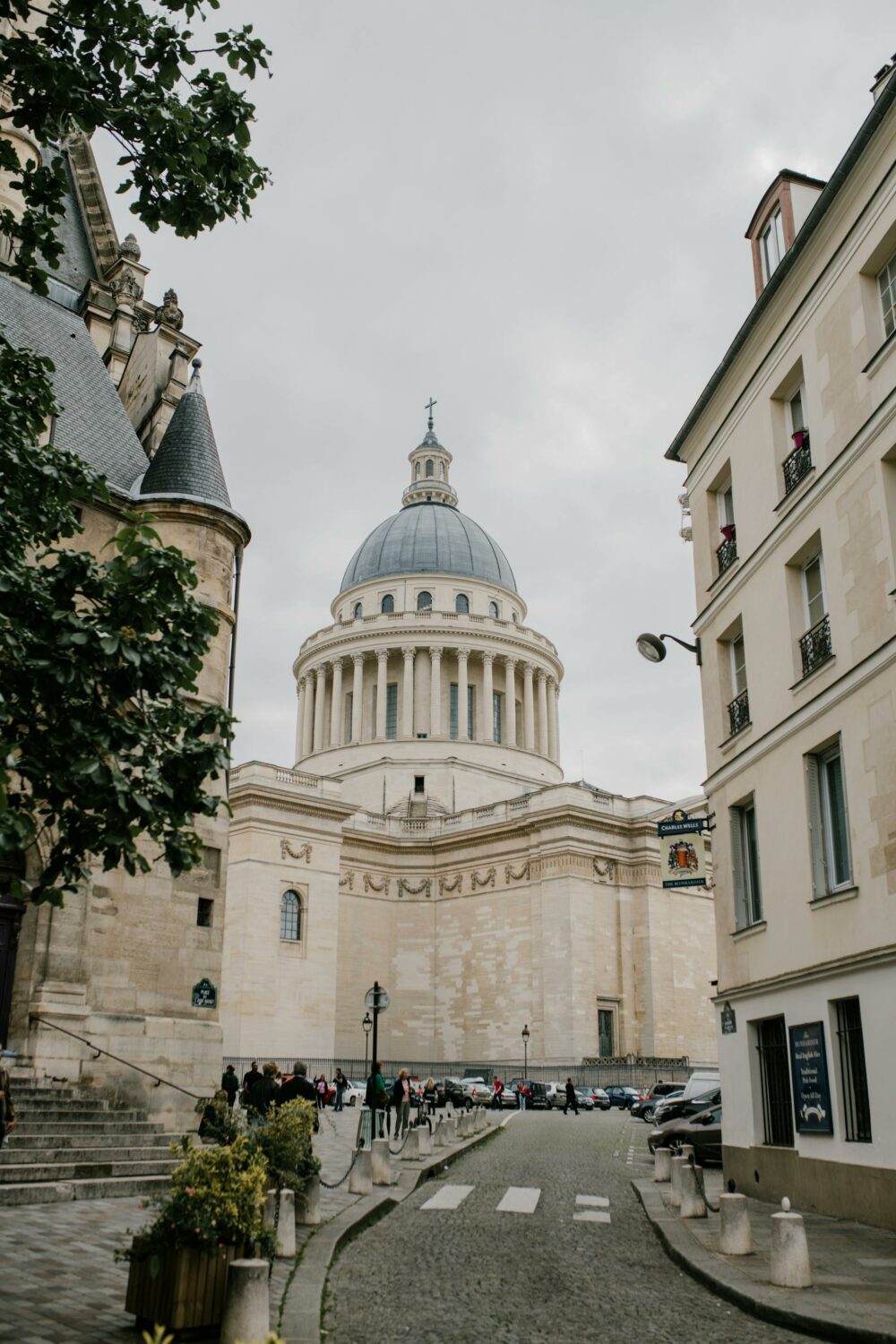
Dans le cœur battant de la rive gauche de Paris, le Panthéon se dresse comme une sentinelle majestueuse, dominant le quartier latin de sa coupole imposante. Ce monument, mélange harmonieux d’architecture néoclassique et de grandeur républicaine, est bien plus qu’un simple édifice. Il est un sanctuaire de la mémoire nationale, un lieu où reposent les plus grands esprits de la France.
L’histoire du Panthéon débute en 1758, sous le règne de Louis XV. Soucieux de remercier le ciel pour sa guérison d’une grave maladie, le roi ordonna la construction d’une église dédiée à Sainte Geneviève, la patronne de Paris. L’architecte Jacques-Germain Soufflot fut choisi pour mener à bien cette entreprise colossale. Son ambition : créer un bâtiment alliant la légèreté gothique à la grandeur classique. Les travaux commencèrent en 1764 et ne furent achevés qu’en 1790, après la mort de Soufflot.
Je me souviens des récits de mon professeur, passionné par l’histoire de Paris, évoquant les défis techniques et artistiques de ce chantier titanesque. Les colonnes corinthiennes, le fronton sculpté, la coupole inspirée du Panthéon de Rome, chaque élément témoigne du génie architectural de Soufflot et de son désir de créer un monument digne des dieux.
Avec la Révolution française, le destin du Panthéon changea radicalement. En 1791, l’Assemblée nationale décida de transformer l’église en temple laïc, dédié aux « grands hommes » de la nation. Le Panthéon devint ainsi le mausolée des héros républicains, un lieu de mémoire où l’on venait célébrer les figures illustres de l’histoire de France. Les premiers à y être inhumés furent Voltaire et Rousseau, symboles des Lumières et de la raison.
Lorsque je me promène dans les vastes galeries du Panthéon, une douce mélancolie m’envahit. Les noms gravés dans la pierre, les bustes de marbre, les drapeaux tricolores, tout ici respire la grandeur et la solennité. Chaque tombe, chaque inscription, raconte une histoire, celle des hommes et des femmes qui ont façonné la France.
Parmi les figures emblématiques reposant sous la coupole du Panthéon, on trouve Victor Hugo, Émile Zola, Jean Moulin, Simone Veil, autant de noms qui résonnent comme des échos de la grandeur littéraire, politique et morale de la France. En observant les visiteurs, venus de tous horizons pour rendre hommage à ces illustres disparus, je ne peux m’empêcher de penser à la force de l’héritage qu’ils nous ont laissé.
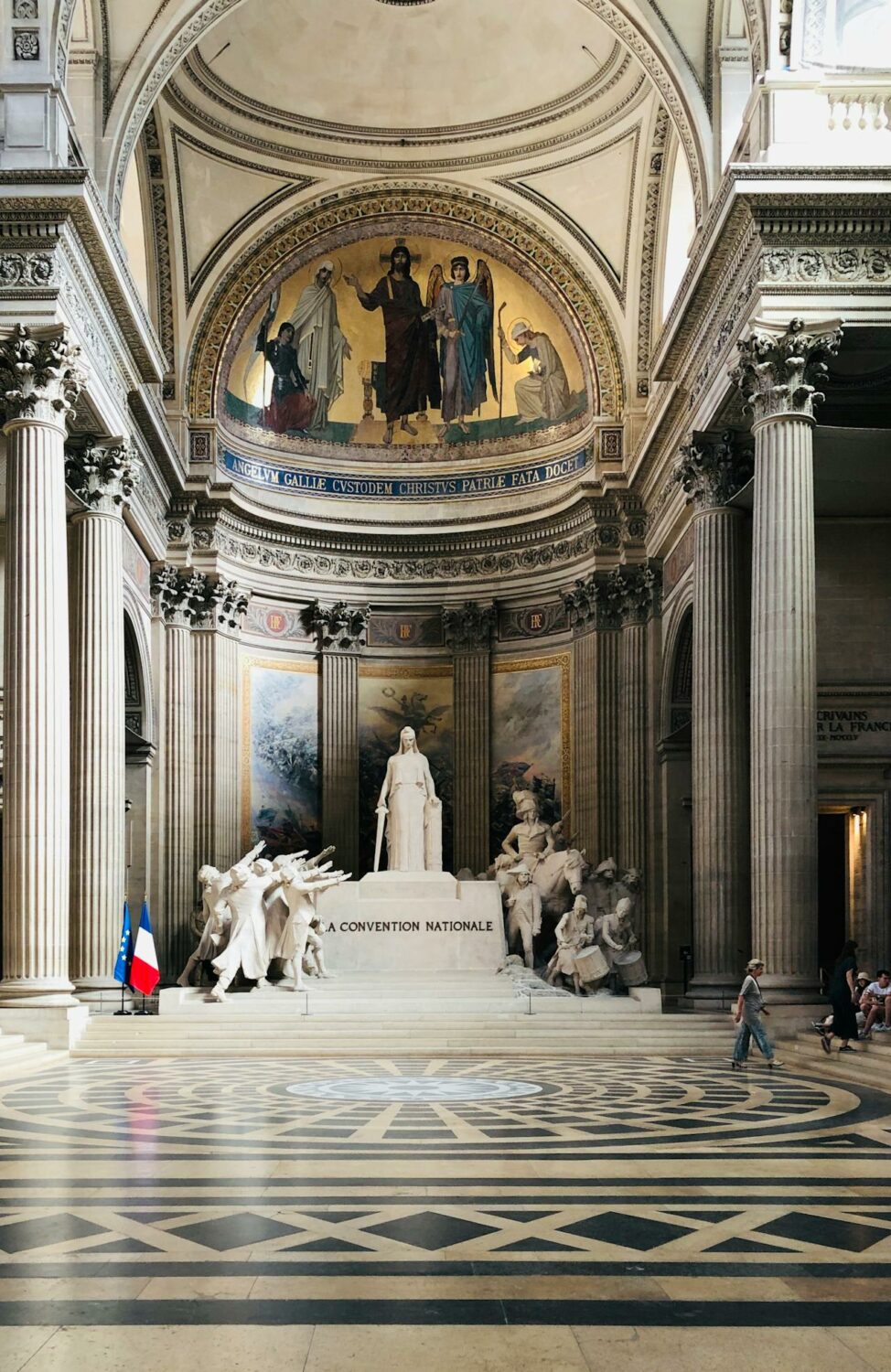
La crypte du Panthéon, avec ses voûtes sombres et silencieuses, est un lieu propice à la méditation. Les sarcophages alignés, les chapelles funéraires, créent une atmosphère de recueillement et de respect. C’est ici que l’on prend pleinement conscience de la fragilité de la vie et de la permanence de la mémoire.
Ainsi, le Panthéon n’est pas seulement un monument historique. Il est un symbole de la continuité entre le passé et le présent, un lieu où l’histoire de France se donne à voir et à ressentir. Chaque visite est une plongée dans les profondeurs de la mémoire nationale, une invitation à la réflexion sur notre propre héritage et sur le chemin parcouru par ceux qui nous ont précédés.
En quittant le Panthéon, le cœur empreint d’une douce mélancolie, on emporte avec soi un fragment de cette grandeur, une part de cette lumière intemporelle. Le Panthéon, à travers ses pierres et ses mémoires, nous rappelle la beauté et la richesse de notre histoire, et nous invite à poursuivre, à notre tour, cette quête de grandeur et de sagesse.
 [:en]
[:en]
In the beating heart of the Left Bank of Paris, the Pantheon stands as a majestic sentinel, dominating the Latin Quarter with its imposing dome. This monument, a harmonious blend of neoclassical architecture and republican grandeur, is much more than a mere building. It is a sanctuary of national memory, a place where the greatest minds of France rest.
The history of the Pantheon begins in 1758, under the reign of Louis XV. Wishing to thank heaven for his recovery from a serious illness, the king ordered the construction of a church dedicated to Saint Genevieve, the patron saint of Paris. Architect Jacques-Germain Soufflot was chosen to undertake this colossal enterprise. His ambition: to create a building combining Gothic lightness with classical grandeur. Work began in 1764 and was not completed until 1790, after Soufflot’s death.
I recall the stories my grandfather, passionate about the history of Paris, would tell, evoking the technical and artistic challenges of this titanic project. The Corinthian columns, the sculpted pediment, the dome inspired by the Pantheon of Rome—each element testifies to Soufflot’s architectural genius and his desire to create a monument worthy of the gods.
With the French Revolution, the fate of the Pantheon changed radically. In 1791, the National Assembly decided to transform the church into a secular temple, dedicated to the « great men » of the nation. Thus, the Pantheon became the mausoleum of republican heroes, a place of memory where the illustrious figures of French history were celebrated. The first to be interred there were Voltaire and Rousseau, symbols of the Enlightenment and reason.
When I walk through the vast galleries of the Pantheon, a gentle melancholy washes over me. The names engraved in the stone, the marble busts, the tricolored flags—everything here breathes grandeur and solemnity. Each tomb, each inscription, tells a story, that of the men and women who shaped France.
Among the emblematic figures resting under the dome of the Pantheon are Victor Hugo, Émile Zola, Jean Moulin, and Simone Veil, names that resonate like echoes of France’s literary, political, and moral grandeur. Observing the visitors, who come from all walks of life to pay homage to these illustrious departed, I cannot help but think of the strength of the legacy they have left us.
The crypt of the Pantheon, with its dark and silent vaults, is a place conducive to meditation. The aligned sarcophagi, the funerary chapels, create an atmosphere of contemplation and respect. It is here that one fully realizes the fragility of life and the permanence of memory.
Thus, the Pantheon is not merely a historical monument. It is a symbol of continuity between past and present, a place where the history of France can be seen and felt. Each visit is a plunge into the depths of national memory, an invitation to reflect on our own heritage and the path trodden by those who preceded us.
Leaving the Pantheon, heart imbued with a gentle melancholy, one carries away a fragment of that grandeur, a part of that timeless light. The Pantheon, through its stones and memories, reminds us of the beauty and richness of our history, and invites us to continue, in our turn, this quest for greatness and wisdom.
[:]